
What Is RAG? A Practical Guide to Retrieval-Augmented Generation
MetaByte Solutions · August 9, 2026
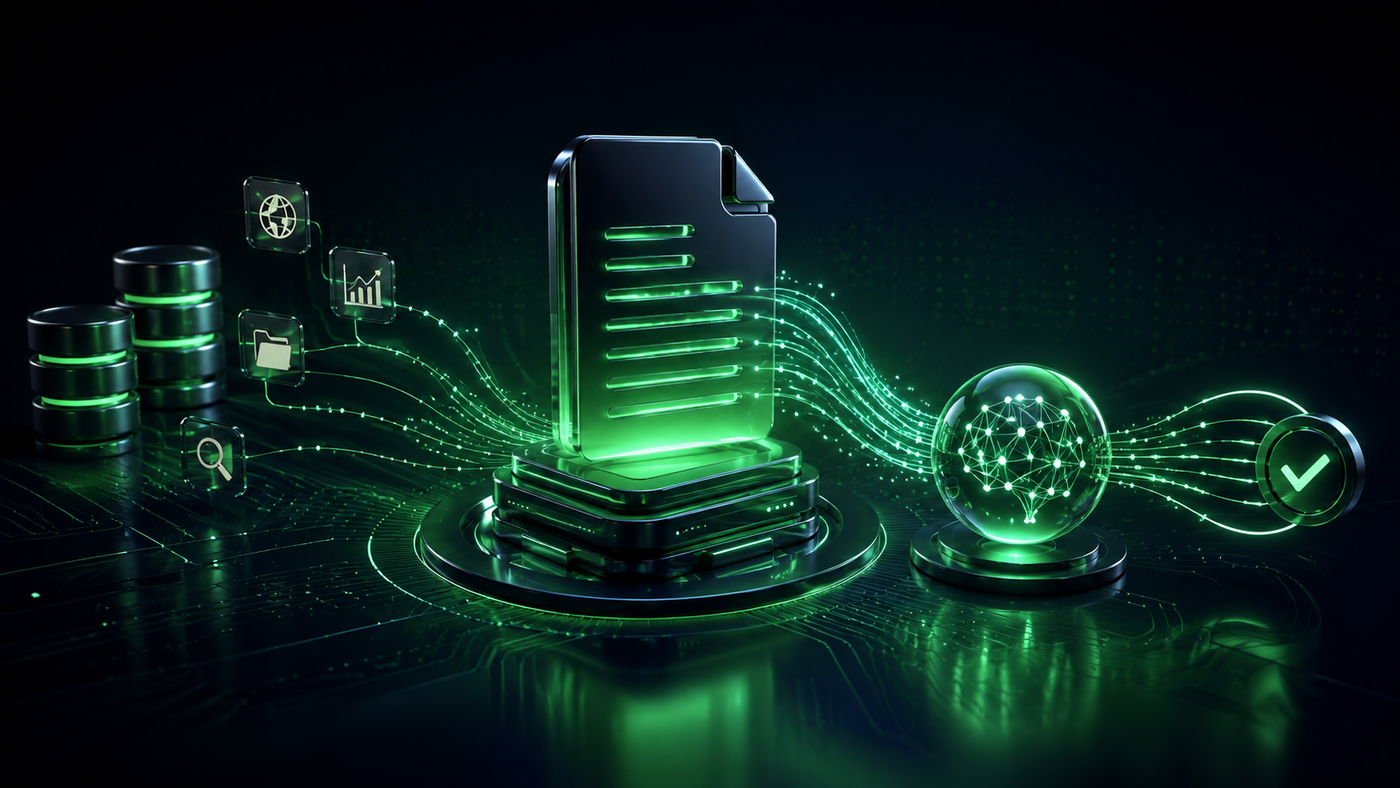
Ask a general-purpose language model a question a
bout your company's refund policy and it will confidently answer - using whatever it learned during training, which almost certainly doesn't include your actual policy. That's the core problem RAG exists to solve. Retrieval-augmented generation connects a language model to a real, current source of truth, so it answers from your documents instead of guessing from its training data.
The Problem RAG Solves
Language models are trained on a fixed snapshot of text, frozen at some point in the past, and they don't have access to your internal documents, your product specs, or anything that changed since training. When you ask one a specific question outside that training data, it doesn't say "I don't know" - it generates the statistically most plausible-sounding answer, which can be confidently wrong. This is the hallucination problem, and it's the main reason AI answers get a reputation for being unreliable in business contexts.
RAG fixes this by changing what the model is answering from. Instead of relying purely on what it learned during training, the model is given relevant passages from your actual documents at the moment it generates an answer, and instructed to base its response on those passages specifically.
How a RAG Pipeline Actually Works
A RAG pipeline has three core stages. First, your source documents - internal wikis, product docs, contracts, support articles - get broken into chunks and converted into embeddings, which are numerical representations that capture meaning rather than exact wording. These embeddings get stored in a vector database.
Second, when a question comes in, the pipeline searches that vector database for the chunks most semantically relevant to the question - not just keyword matches, but passages that mean the same thing even if the wording is different. Third, those retrieved passages get handed to the language model along with the original question, and the model generates an answer grounded in that specific content, ideally with a citation back to the source.
The quality of a RAG system lives almost entirely in the first two stages. A model can only answer as well as the passages it's given, so chunking strategy (how documents get split up) and retrieval quality (how well the search step finds the right passages) matter far more than which language model sits at the end of the pipeline.
RAG vs. Fine-Tuning
These two get confused constantly, and they solve different problems. Fine-tuning changes the model's underlying weights by training it further on a specific dataset - it's expensive, needs to be redone whenever your data changes, and is better suited to teaching a model a new style, format, or skill than teaching it new facts. RAG doesn't touch the model at all. It changes what information the model has access to at answer-time, which means updating your knowledge base doesn't require retraining anything - you just re-index the changed documents.
For most business use cases - answering questions from a knowledge base, a help center, internal documentation - RAG is the more practical and far cheaper option. Fine-tuning earns its cost in narrower cases, like teaching a model to consistently follow a particular tone or output format. The two aren't mutually exclusive either; some systems use both, but RAG alone is usually where teams should start.
Why "Just Upload a File to ChatGPT" Doesn't Scale
File-upload features in consumer AI tools are doing a lightweight version of RAG behind the scenes, and for a single document and a single conversation, that's fine. It breaks down once you have hundreds of documents that change regularly, need retrieval quality tuned for how your users actually ask questions, or need the system embedded in your own product rather than a chat window. At that point you need a real pipeline: your own vector store, your own chunking strategy, and re-indexing that runs on a schedule tied to how your content actually changes.
What Good RAG Looks Like in Practice
A well-built RAG system does three things a naive implementation usually misses. It cites its sources, so every answer can be traced back to the exact passage it came from - which builds trust and lets someone verify a surprising answer instead of just believing it. It's evaluated against real questions your users actually ask, not a generic benchmark, so you have an actual accuracy number instead of a vibe. And it has a re-indexing process that matches how your content changes, whether that's a nightly job for a fast-moving knowledge base or a manual trigger for something more static.
When You Actually Need This
RAG makes sense once you have a real body of documents - internal wikis, contracts, product documentation, support content - that a general-purpose AI keeps getting wrong or making up answers about. It's less useful if that content doesn't exist yet in an organized form; in that case, getting the source material together is the actual first step, since no retrieval system can ground answers in documentation that isn't written down anywhere.
Common Ways RAG Systems Fail
Most RAG failures aren't model failures - they're retrieval failures, which is why chunking and search quality deserve more attention than they usually get. A common one is chunking documents purely by character count, which slices sentences and context apart arbitrarily and hands the model fragments that no longer make sense on their own. Another is retrieving passages that are topically similar but not actually relevant to the specific question asked - a search that returns "close enough" instead of "correct" produces answers that sound plausible and are subtly wrong, which is arguably worse than an obvious failure because it's harder to catch.
A third common failure is stale data: a pipeline that indexes documents once at setup and never re-indexes as content changes will confidently cite outdated information as if it were current, which undermines the entire premise of grounding answers in real data. And a fourth is skipping evaluation entirely - shipping a RAG system without ever measuring its accuracy against real questions means nobody actually knows how well it's working until a user complains.
What to Ask Before Trusting a RAG Vendor's Claims
"Our AI is grounded in your data" is a claim, not a guarantee, and it's worth pressure-testing before taking it at face value. Ask how chunking is handled and whether it's been tuned for your specific document types, not applied as a generic default. Ask how retrieval accuracy is measured, and ask to see the evaluation results, not just a demo with cherry-picked questions. And ask what happens when the retrieval step finds nothing relevant - a well-built system says "I don't have information about that" instead of falling back to the model's general training data and generating an answer that looks grounded but isn't.
If you're evaluating whether RAG is the right fit versus a broader AI assistant that also takes actions, the honest answer depends on the use case - a pure Q&A tool over documents usually just needs RAG, while something that needs to update records or trigger workflows needs the broader assistant pattern built around it.